T. 07768 654955 E. scott.walker@scconsultancy.uk
The UK Government’s intransigence on the future role of coupled support for livestock producers is placing every link in the meat chain at risk warns the Scottish Association of Meat Wholesalers (SAMW).
Association president Alan McNaughton, speaking at the Royal Highland Show, delivered a sharply worded response to UK Minister of State David Heath’s reported comment that belief in coupled payments was ‘for the birds’.
“Not only does such a view fly in the face of the commercial reality of what every meat plant owner in the land has experienced in the past eight years, it also insults the intelligence of every industry specialist who has spoken out against the UK Government’s deeply unhelpful approach to the livestock sector aspects of CAP Reform,” said Mr McNaughton.
“If the UK’s opposition to coupled support prevails in the final CAP settlement, damage will be done right across the meat chain. UK producers will be left at a severe disadvantage to their major competitors, especially France; processors will be left to choose between domestic and export business, as there won’t be sufficient stock available to satisfy both sectors; and retailers will be left with a pricing choice which can only go one way, upwards.
“Ministers Paterson and Heath are negotiating the UK meat industry’s exit from global business, shutting the doors on export growth and development and turning out the lights on businesses which have won admirers across the world but have insufficient supplies to satisfy sales demands.
“This may not fit with DEFRA’s view of coupled support and market economics, but the commercial reality of the past eight years is that those countries which have used coupled support to encourage production have seen stock numbers remain secure, at worst, and increase in some cases. At the same time, UK production continues to decline with even prices reaching £4 a kg failing to produce any evidence of a shift in production attitudes.
“Neither are we a lone voice on this issue, fighting our corner purely for our own commercial reasons. No, this is a united industry stance by a farm-to-plate chain which actually understands how business works. I don’t think we’re the ones whose views are ‘for the birds’.”
A strong line-up of speakers will address SAMW’s annual conference in Glasgow on April 20, each bringing a valuable depth of knowledge and experience to this year’s theme of ‘Building for the Future’.

Richard Lochhead MSP
The keynote conference speech will be given by the Scottish Cabinet Secretary for Rural Affairs and the Environment. Since his appointment as Cabinet Secretary in 2007, Richard Lochhead has constantly demonstrated his affinity with, and support for, the rural sector, agriculture and our industry.

Charles Milne
Our second speaker is Charles Milne, Director of the Food Standards Agency in Scotland since June 2009. He is currently at the centre of the development of the proposed new Scottish food body and has been instrumental in recent changes to the administration of meat hygiene in Scottish meat plants.

Mark Thomson
Mark Thomson, Business Unit Director at Kantar Worldpanel, returns to our conference platform after an ‘interesting’ trading start to the year for the meat sector. Looking after clients in Scotland and Ireland, he has worked with all of the main retailers, as well as their customers, within the UK meat and poultry sector.
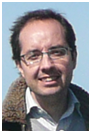
Javier Dominguez
Finally, Javier Dominguez is a most welcome newcomer to our conference platform in his role as Deputy Veterinary Director and Head of Strategy in Hygiene and Microbiology at the Food Standards Agency (UK). Currently heavily involved in the EU’s development of a new method of meat inspection, he is ideally placed to comment on the latest legislative progress in Brussels.
Full conference and dinner dance details
Date/Venue – April 20th – Marriott Hotel, Glasgow
Conference – 9.45am to lunch
Annual dinner& dance – starting at 7pm
Booking forms have been issued but anyone who hasn’t already received the necessary details should contact Ian Anderson, Executive Manager by email on ianranderson@btinternet.com
The past 12 months have seen some vital meat industry changes being made, head-lined by the Scottish Government’s commitment in June to establish a stand-alone meat inspection service for Scotland.

With six months work on that decision already completed we’re beginning to see the framework of the new organisation starting to emerge. It was always going to be a painfully slow process, of course, but one which we believe will be worth all the effort which the Scottish food and farming industry is putting into creating the progressive and far-reaching body which we’ve all sought for so long.
Our first thought in June was to welcome the Scottish Government’s commitment to the formation of a new ‘cooperative and collaborative approach to meat inspection in Scotland’ and we continue to view it as a thoroughly refreshing prospect for SAMW’s member companies. Whole industry involvement in the process is also hugely encouraging, clearing the way for Scotland to maintain its position as a source of high quality meat, produced, processed and marketed to the highest possible standards.
There is plenty of unfinished business to keep us working in 2013, of course.
To begin with, the new stand-alone body will take time to be pushed through the necessary Scottish and UK hoops, a requirement which demands a careful balance of patience and urgency. We obviously mustn’t cut corners in setting up the new structure. That would benefit nobody. At the same time, it’s essential that momentum is maintained in setting structures, appointing people and agreeing who pays for what, and how much.
Unfinished business is also the correct phrase to apply to CAP Reform and the desperate need for an injection of targeted support to kick-start the revival of livestock supplies. The downward drift in cattle and sheep numbers is a massive negative for Scotland’s meat industry, adding to the sector’s unit costs and depriving the whole country of valuable jobs and income at a time when just about every other industry would love to have our market opportunities, both at home and abroad.
We have great natural resources, served by a top class production, processing and marketing chain. Unfortunately, the CAP mistakes of 2003, which we warned about at the time, have resulted in a steady erosion of livestock supplies, leading to missed sales opportunities, company closures and a substantial amount of lost business for Scotland plc.
We’ve been banging away at this issue all year, urging Government leaders in Edinburgh, London and Brussels, to make sure the current CAP Reform includes special measures for Scottish livestock producers. We’re not asking for financial aid to keep livestock producers and meat companies in business, however, or seeking support for an industry which is failing or unprofitable. We’re merely asking for Scottish, UK and EU politicians to invest in a sector of the economy which has the capacity to repay such confidence many times over in terms of reduced spending on imported meat, increased earnings from meat exports and a serious commitment to long-term meat sector jobs. We must also never under-estimate the contribution which livestock farming makes to environmental betterment in the uplands; it’s the existence of sufficient cattle and sheep on the hills which drives the kind of environment which makes Scotland such an attractive place.
These are powerful reasons to justify the increased support for calf and lamb production we are advocating. Furthermore,those who say ‘let market forces decide’ are being naive is they think that will result in anything other than the exporting of Scotland’s beef and lamb business to India, China , Brazil and elsewhere rapidly followed by rising costs for buying back the end products we could, and should, be producing at home.
We will keep seeking to drive this message home in 2013. Frankly, the future of Scotland’s meat and livestock chain depends on it.
Away from these two big 2012 issues, SAMW’s members have seen several significant progress points being secured over the past year.
For example, we have continued to press for the timely implementation of TSE Roadmap2 and now we’re within touching distance of the lifting of BSE testing on all healthy slaughtered cattle; have made progress by getting a review of bovine intestine and mesentery fat on to the agenda in Europe with EFSA now collecting the data for forthcoming risk assessments; have secured some changes to the FSA’s in-plant audit process and scoring system to better reflect FBO performance, with an undertaking to review other important aspects; and have managed to stave off full cost recovery of meat inspection charges until the system becomes more efficient, proportionate and risk based.
The proposed ending of BSE testing for healthy slaughtered cattle, on which a Defra consultation is currently running, has been welcomed by SAMW. An equivalent consultation for Scotland is due shortly.
According to the current Defra proposal, the ending of testing for healthy slaughtered cattle is expected to apply from the end of the first quarter of 2013.
“We very much welcome this proposal,” Ian Anderson, the Association’s Executive Manager, told the Meat Trades Journal. “We have said for some time, in fact, that while the need for BSE controls to be imposed quickly at the time was paramount, the authorities have been slow to wind them down even when the evidence supported that. We are very pleased therefore that this science-based proposal has come forward. It will save the Scottish industry almost half a million pounds a year at a time when the economics of beef processing are very difficult.”
Mr Anderson also took the opportunity to highlight two other areas of ‘testing concern’, adding: “We now need further proposals to re-classify most of the bovine intestine and the mesentery fat as Category 3 animal by products and end the need to remove the spinal cord from older sheep. The benefits which these measures would deliver, without compromising public health, would far outweigh those from the BSE testing of healthy slaughter cattle.”
T: 07768 654955 E: scott.walker@scconsultancy.uk
© samw.org.uk - All rights reserved - Scottish Association of Meat Wholesalers | Privacy Policy