T. 07768 654955 E. scott.walker@scconsultancy.uk
SAMW’s 2025 conference attracted a strong line-up of speakers and sponsors, enabling members and guests to embrace a range of key issues from how to boost livestock numbers to the impact of weight loss drugs on meat demand and the challenge of net zero farming.

(l-r) Robert Neill, Alan Brown, Andrew Niven & Prof. John Gilliland
Association president, Alan Brown, set the tone for the conference debate with his ‘Grow Baby Grow’ challenge to the nation’s political leaders (as reported in our news section).
No commitment on cow numbers
Jim Fairlie, Scotland’s Minister for Agriculture and Connectivity, who joined the conference via video link, assured delegates of his support for the industry, describing the red meat sector as being vital to the country’s economy.
Telling the conference audience that he wanted to work to make sure the country’s red meat industry has a sustainable future, Fairlie added that he had ‘no policy to reduce livestock numbers in Scotland’.

Conference delegates
When challenged during a question session on his presentation that his comments amounted to ‘hollow words’, the Minister said he disagreed with such a charge.
Asked to support a call to restore Scottish livestock numbers to 2020 levels, however, the Minister declined to do so, stating that it wasn’t the government’s job to say ‘keep more cows’.
More cows for me
NFU Scotland, vice president, Robert Neill, assured meat processing listeners that he for one was committed to increasing cow numbers on the family farm in the Scottish Borders, a message that went down well with delegates.
Weight loss drugs and meat demand
Andrew Niven from Scotland Food & Drink’s Knowledge Bank delivered a detailed assessment of how meat demand might be impacted by the developing use of weight loss drugs. (A full report on his presentation is being prepared).
Net Zero challenge and success
Professor John Gilliland, a willow and livestock farmer from Northern Ireland, told delegates about his own successful journey to ‘Beyond net zero’, urging the UK to ‘get its act together’ on net zero livestock production.
A special adviser to Quality Meat Scotland and the Agriculture and Horticulture Development Board, Prof Gilliland left the conference audience in no doubt that there is plenty of room for positivity in the future management of net zero in farming. (A full report on this presentation is also being prepared).
Sponsors
Finally, a massive thanks to all our 2025 conference sponsors whose support for this important industry even is hugely appreciated:
Conference displays pictured below:


Thanks also to ABP who supplied dry aged sirloin joints for the conference lunch.
Scotland’s meat wholesalers have called on government leaders to back the red meat industry’s ‘Grow Baby Grow’ agenda.
“While our governments in London and Edinburgh strive for growth, seeking ever new ways to boost the UK and Scottish economies, Scotland’s red meat industry is perfectly placed to deliver growth in simple, time-honoured fashion,” Alan Brown, President of the Scottish Association of Meat Wholesalers (SAMW) told the organisation’s annual conference in Edinburgh on Friday, September 26.

SAMW President Alan Brown addresses 2025 conference
With the nation’s political parties working their way through the autumn conference season, Brown urged party leaders to recognise the fact that Scottish red meat production is fully equipped for growth in contrast to many other GDP expansion options.
“While new investments in AI technology and the like dominate the political headlines, accompanied by eye-watering financial commitments, it is important to remind our national leaders that they have a ready-made growth resource on their own doorstep,” said Brown.
“Every time I talk to producers about the industry, the overwhelming message is about Scotland’s red meat potential. It’s the same for our own member processing businesses, who are all striving to develop new products and new markets – at home and abroad.
“The facts are that we have a well-equipped production, processing and retailing chain. We’re ready to go to new levels of output, given the right support and confidence.
“Why, in this context, would any government sit by and watch such a well-placed industry being slowly run down and diminished? It doesn’t make any sense at all, and yet this is what has happened throughout the past 10 or more years.
“It has been a particularly tough last 12 months for our industry, complete with business casualties, all of which always inflict job and economic losses on local areas and national GDP. Any such loss is to be regretted and it’s important that we recognise the negatives of the past year for what they were – deeply disappointing and most definitely not something we wish to repeat in 2026.
“In contrast, to borrow and adjust a quote from the recent US President’s State visit, let’s Grow Baby Grow in 2026 and beyond. This needs to be our mantra for the future and hopefully one that will gain government support at UK and Scottish levels. We’re most definitely ready as a red meat farming, processing and retailing industry.”
Scotland’s red meat sector has enormous growth potential with growing domestic and international demand. But that potential has been squandered by years of political indifference, shallow words, and a lack of meaningful action.
“Farmers, meat processors and retail leaders once again converged on this year’s Royal Highland Show to celebrate the strength and heritage of Scotland’s livestock and red meat production,” said Alan Brown, President of the Scottish Association of Meat Wholesalers (SAMW). “But behind the fanfare and displays lies a far more fragile reality—one of shrinking livestock numbers, underutilised processing capacity, and rising imports.
“Sadly, the quality of livestock on display across the showground is not being matched by on-farm numbers, where falling production is leaving Scotland’s meat plants running at no better than 70% operating capacity and with some retailers looking abroad to fill shelves, despite Scotland’s unmatched natural assets for sustainable red meat production. The recent closure of a member plant is yet another stark warning—jobs lost, supply chains broken, and another outlet removed for Scottish farmers.”
The fragility of Scotland’s processing sector was shown again this month with the plant closure, removing a valuable outlet for farmers and losing important jobs from the affected location. SAMW has warned repeatedly that such closures are a constant risk for our industry and it is no comfort whatsoever to be proved right, once again.

Alan Brown being interviewed by STV during BeefTech 25, the Royal Northern Agricultural Society’s specialist event held at Home Farm, Kininmonth, Mintlaw.
“We’ve been sounding the alarm for years,” said Brown. “This isn’t a surprise—it’s the inevitable result of political complacency and an unwillingness to replace policies that have not and will not work. The continued decline we’ve seen in livestock numbers is the result of what, in practical terms, amounts to reduction by stealth, orchestrated by government.
“Politicians have again walked the Highland Show, praising Scottish livestock, pledging their support, and delivering all the right soundbites. But soundbites don’t stop decline. Soundbites don’t rebuild breeding herds. Soundbites don’t keep processors in business.”
Farmers and processors are calling for more than admiration—they need policy certainty on future support, the ability to plan across multi-year cycles, and a government that truly understands the mechanics and potential of the red meat supply chain.
“Properly backed, encouraged, and supported, Scotland’s meat and livestock chain could deliver a significant GDP boost for the national economy over the next decade,” he said. “The sector is ready to grow, to invest, to lead—but only if governments match the industry’s ambition with real-world, strategic support.
“This year’s Royal Highland Show marked a pivotal time for Scottish red meat. Scotland must decide: do we build a thriving, value-adding red meat sector—or do we stand by and watch it decline? The choice is stark. And we can’t afford to get it wrong.”
SAMW respond to ‘no cuts’ pledge
“The Cabinet Secretary’s (Highland Show) pledge that the Scottish Government has no policy to cut livestock numbers either now or in the future, is clearly welcome as a direction of travel,” said SAMW President, Alan Brown. “Sadly, we’ve been on this journey throughout the lifetime of this government and numbers have continued to decline each and every year. Unless we see these latest positive words converted into new and supportive policies, nothing will change.
“As for the Cabinet Secretary’s challenge to industry to provide Government with net zero solutions to enable the CCC targets to be met, the truth is that industry has repeatedly researched, debated and delivered such solutions over many years, without ever seeing government provide the necessary incentives to make the net zero process work; at least not without damaging Scotland’s livestock ambitions.”
Deadline to enter – May 23
The 2025 Meat Industry Awards programme, staged each year by Meat Management magazine, is well underway, with the organisers reminding participants that the final deadline for product nominations is May 23.
 The annual Awards is the UK’s biggest annual initiative of its kind and recognises the best of the best across various product categories, plus highlighting the leading people, trade bodies and companies via a voting and nomination process too.
Free entry for products is quick and easy, and businesses both large and small can nominate their products or vote in all 21 categories. The number of product nominations allowed in each category is unlimited, and products can also be nominated across multiple categories.
The judging periods will culminate in the 2025 ceremony, held at the Hilton Birmingham Metropole, near to the NEC, on Thursday evening 18th September. This year, celebrity magician and comedian Pete Firman will host the awards alongside Meat Management publisher Graham Yandell MBE.
Graham Yandell commented: “After such a positive response to our 2024 Meat Management Meat Industry Awards, we are seeing high volumes of product nominations and voting. This year’s initiative could well be our biggest yet.
Head Judge for product evaluations Keith Fisher of the IoM added: “Along with fellow judges I am looking forward to evaluating and tasting the diverse range of products that have been nominated. This is an ideal opportunity for companies to put their products on the map and to enhance branding and company image.
“The message is; make sure all your products are nominated by the deadline Friday 23rd May. It’s going to be another great year for judging products I’m sure.”
For more information about the 2025 Meat Management Meat Industry Awards, head to meatmanagement.com/awards or email Libby Goodwin on 01908 613323.
Scotland’s beef industry is in serious decline, exacerbated by Government policy inaction and policy failures that have steadily eroded vital cattle numbers.
Rather than backing sustainable domestic production and prioritising the rebuilding of Scotland’s national herd, government policies have increased our reliance on imported beef to feed the nation. It makes no sense to transport beef from the other side of the world to feed our nation when our own farmers are capable of producing premium-quality beef to world-leading standards, if only government would give the industry some encouragement.
The freedom to choose Scottish or UK-produced beef anytime and anywhere is rapidly disappearing from our retail shelves. As domestic cattle numbers continue to fall, Scotland’s supply chain is being damaged beyond repair, bringing business closure and the loss of valuable jobs ever closer.
Scottish farmers and processors adhere to some of the highest environmental and animal welfare standards in the world, producing some of the most sustainable red meat available anywhere across the globe. Favouring imports from far-flung suppliers in preference to boosting our domestic industry, means that Scotland is opening its doors ever wider to products of questionable welfare provenience while adding to global carbon emissions. In effect, recent and current policies amount to an offshoring of Scotland’s emissions’ responsibilities on the basis that if it doesn’t happen here then if doesn’t count.
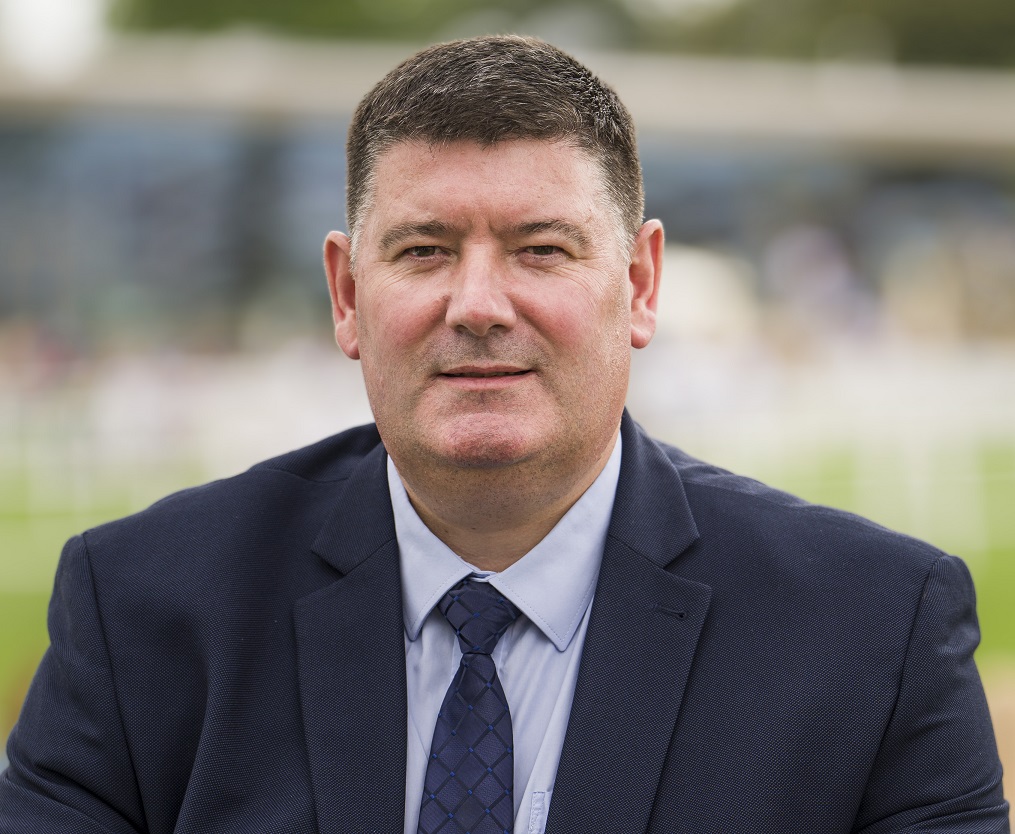
Alan Brown
“Current policies are simply not working,” said Alan Brown, President of the Scottish Association of Meat Wholesalers (SAMW). “The serious decline of our domestic beef sector is nothing less than a disgrace.
“We are watching the slow dismantling of a high-quality, world-renowned industry. Choosing not to intervene in the sector’s decline, in the name of environmental goals, is a false economy. It is nothing more than greenwashing of the most appalling kind.
Greenwashing Undermines True Sustainability
“Those who understand and appreciate our industry know that homegrown Scotch Beef is part of the climate solution—not the problem. Relying on imported beef to meet consumer demand while ignoring its true environmental cost is not just disingenuous—it’s harmful.”
Mr Brown also emphasised the untapped economic potential of the Scotch Beef supply chain—from farm to processor to retailer—at a time when the UK Government is actively seeking to grow GDP.
“Scotland’s red meat processing sector already generates over £1 billion annually and supports more than 3,000 jobs. With the right government support, we could achieve even more. Increased domestic production would also drive on-farm investment and rural growth—helping address some of the UK’s wider economic challenges.”
Industry Under Pressure
This urgent call for action follows mounting pressure on SAMW member companies, who are striving to maintain supply chains despite a serious decline in the national cattle herd over the last decade. Scottish meat processors are currently operating at only 70% capacity, with weekly production down 9% over the past four years alone.
Reversing this decline will take time—at least three years of dedicated on-farm breeding and production are needed just to stabilise the current situation. In the meantime, the UK is becoming increasingly dependent on imported beef to meet domestic demand.
However, relying on imports is a risky strategy. As other regions around the world face their own supply shortages, access to foreign beef cannot be guaranteed. Disruption to global trade, coupled with limited availability, ultimately leads to one outcome—increased prices for consumers.
Call for Strategic Change
“This issue has been raised with Government time and again,” said Mr Brown. “Yet nothing has changed. We are now at a tipping point. Without urgent and strategic intervention, we risk losing a cornerstone of Scotland’s agricultural identity and businesses failing—sacrificed to unsustainable global imports and short-sighted policy decisions.”
The 2025 New Year Lunch panel session addressed “The Future of Red Meat” during a well-attended annual event in Edinburgh on January 10. Panel members (pictured below) fielded a wide range of questions from SAMW members and guests with a key focus placed on this year’s projected livestock supplies and the urgent need arrest the continuing decline in numbers.

NYL panel: (l-r) Roisin Turner, Group Commercial Manager, Stoddart’s; John Sleigh, Editor, Scottish Farmer; Andrew Niven, Strategic Market Intelligence Manager, Scotland Food & Drink; and Orla Sherry, Kepak Technical Director, Meat Division UK.
The prospect of gaps appearing in the red meat sections of UK supermarkets next year is a real possibility warns the Scottish Association of Meat Wholesalers (SAMW).
“The continuing decline in cattle numbers has worsened over the last 12 months to the extent that domestic supplies are nearing a critical tipping point, bringing is to the brink of gaps in supply at certain times of the year,” said SAMW President, Alan Brown.
Alan Brown
“Despite investing extensive time and effort in raising this issue with government ministers and officials over many years, much of which has not been taken on board at all seriously, the harsh reality is that the erosion of breeding cattle numbers has reached the stage where this is likely to be felt on retail shelves at certain points in 2025.
“SAMW member companies are already operating on reduced throughputs on a regular basis, a fact which is impacting unit costs and raising serious questions about the future viability of some processing lines and the jobs associated with them.”
Suggestions that imported product can easily fill any gaps that arise are misguided. Global red meat supplies are under pressure, with international buyers seeking to secure products from Scottish exhibitors at the recent SIAL Food Fair in Paris.
“Scotland’s cattle number decline is a massive missed economic opportunity for the country,” said Mr Brown, whose members employ close to 3000 workers across 29 processing plants. “Instead of growing our national beef herd in response to rising demand, we are merely allowing output to fall.
“Our 2025 plea to government ministers and officials is to focus on action, not words, and to stop giving mixed messages to producers and processors about the future direction for Scottish red meat production. This is one of the country’s most successful and highly regarded sectors which plays a massive part in the economic well-being of Scotland. We need the industry to be developed before it’s too late.
“Having come through a UK election in 2024, with a Scottish election due within the next 18 months, there is very real danger that the red meat ‘action can’ will once again be kicked down the road. No one can afford to let this happen.
“It takes three years to produce each kilogram of quality beef for which Scotland is famous, a fact which already takes the impact of any decisions reached next year, deep into 2028. Building delay on delay, while reducing the herd by stealth, does absolutely nothing for our industry, or consumers, except create the potential for empty shelves and widespread job losses.”
Rising costs
The SAMW President also warned that rising costs are impacting processors, well beyond the inflationary norm, especially as related to mandatory inspection charges imposed by Food Standards Scotland (FSS).
“During the Covid-19 pandemic, FSS showed a degree of flexibility in relation to operating measures within meat processing plants,” said Mr Brown. “Output was duly maintained in the face of extreme odds, without any reduction to food safety. We had hoped this would mark the beginning of a more sustained level of post-pandemic flexibility by FSS towards SAMW member businesses. We envisaged that the return to normal working conditions would be used to embrace a thorough modernisation of the meat inspection process, utilising new technologies and new ways of working. Unfortunately, post-Covid reality has seen a return to how it was before the pandemic struck.”
Having faced a 20% charging increase in 2024, driven by a new 35-hour week and public service pay increases of 10%, subsequently mitigated by a Scottish Government subsidy, early indications point to another major hike in FSS charges in 2025.
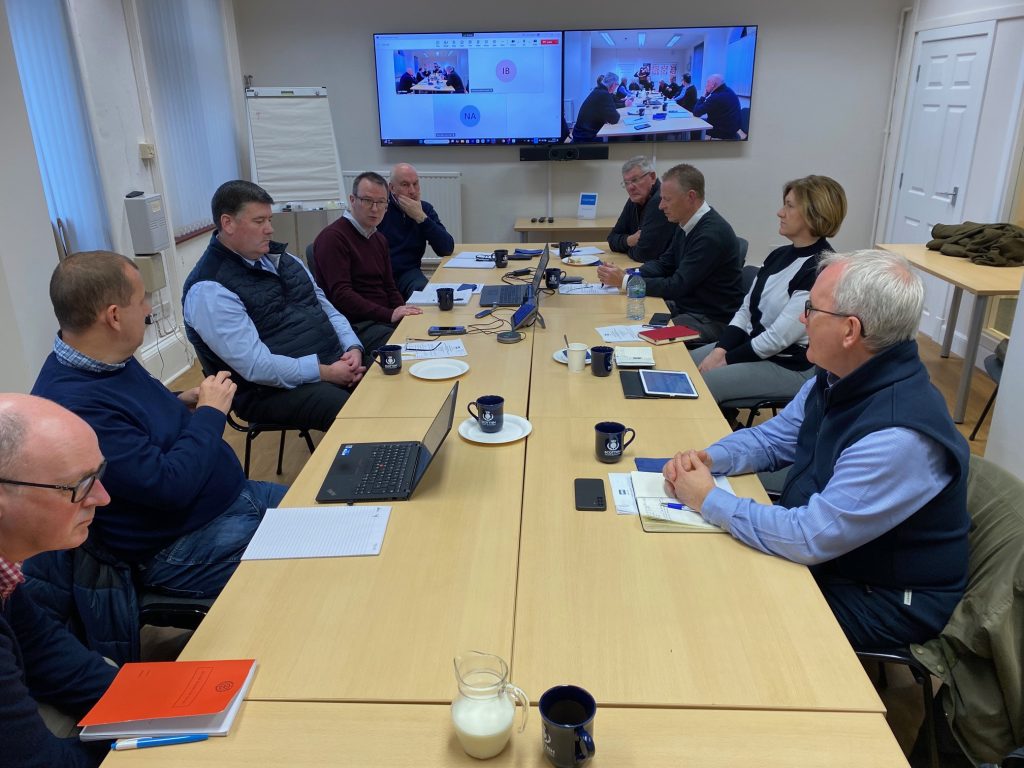
SAMW Executive in session in December, 2024, when supply shortages and rising costs were both given detailed attention
“We want to engage with FSS and with Government legislators over how we might create a modern and more cost-effective inspection system, fully equipped to deliver top class food safety,” said Mr Brown. “We made very little progress, if any, towards this in 2024.
“We must explore innovative solutions, such as using CCTV for ante mortem inspections. If this works, as we know it can, then we can surely work together to secure the necessary legislative platform.
“There are still many reasons to be positive about Scotland’s red meat future, given the amazing production and processing base which exists in this country. It would therefore be a great waste if, instead of moving forward in 2025, the coming 12 months is allowed to become a year of costly decline, missed opportunities and empty red meat shelves.”
Scotland’s meat wholesalers have issued a stark warning that the rural landscape of Scotland will undergo significant change if the ongoing decline in cattle numbers isn’t addressed as a matter of urgency.
Alan Brown, President of the Scottish Association of Meat Wholesalers, speaking at the organisation’s annual conference at Ingliston on September 6, told industry, farming and government leaders that jobs, the Scottish economy and food security will all be impacted unless real action is taken the reverse the continuing downturn in livestock numbers.
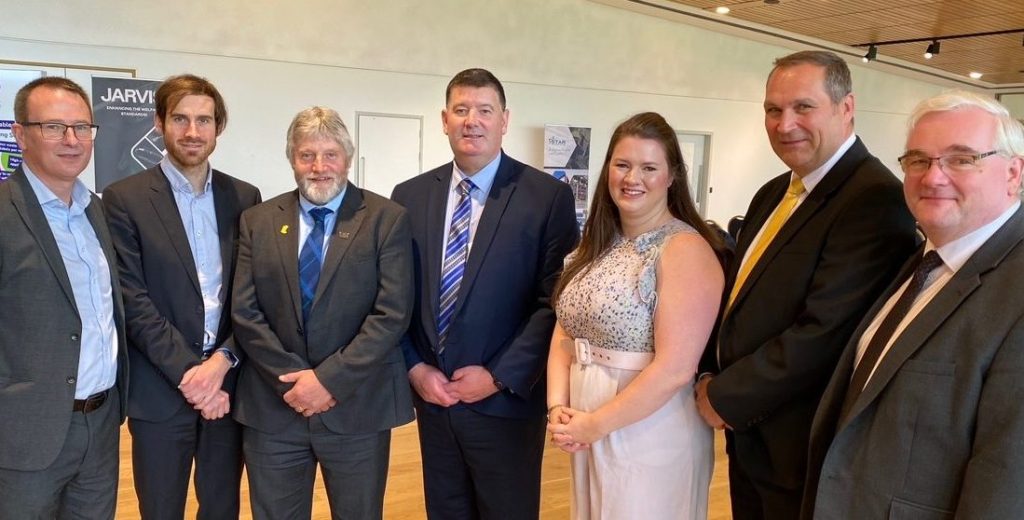
Conference speakers (l-r) Scott Walker, SAMW Executive Manager; Iain Macdonald, QMS Market Intelligence Manager; Martin Kennedy, NFU Scotland president; Alan Brown, SAMW President; Sarah Millar, QMS Chief Executive; Ian McWatt, FSS Deputy Chief Executive: and George Burgess, Director of Agriculture and Rural Economy, Scottish Government.
Clear plan needed
Calling on the government for a clear action plan to boost livestock production in Scotland, he warned that mere words would no longer be sufficient.
“We need assurances that all future policies will be thoroughly valuated to ensure there is a platform for livestock growth in Scotland rather than the decline we’ve experienced for far too long,” he said.
“We also need increased collaboration across the whole rural industry, government included, if we’re to finally start to solve this problem. If, however, no action is taken then the critical mass of livestock in Scotland will continue to decrease and our national rural landscape is going to change.”
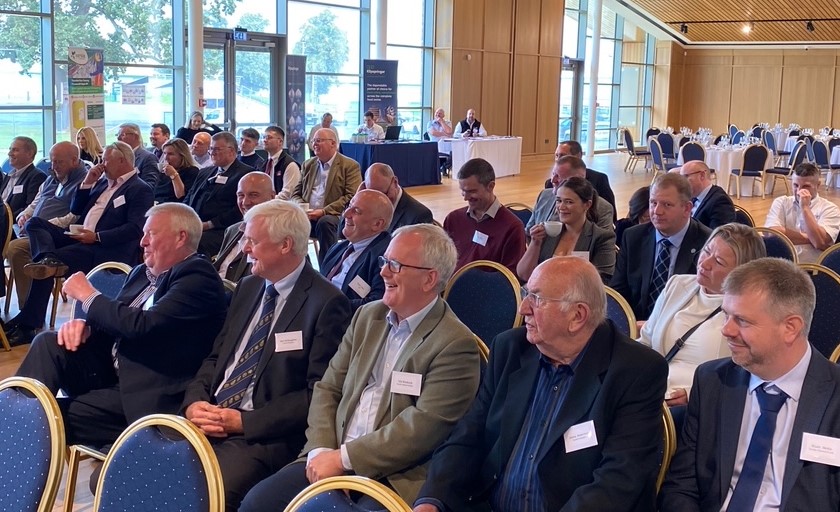
Conference delegates
Mr Brown was followed on the conference platform by Quality Meat Scotland, Chief Executive, Sarah Millar and QMS Market Intelligence Manager, Iain Macdonald, who outlined the economic potential of Scotland’s beef sector, based on the results of the organisation’s recently published Red Meat Industry Profile report.
NFU Scotland, president, Martin Kennedy, also addressed the gathering on the potential of Scotland’s livestock industry if the right economic and policy conditions are created to enable the sector to move forward and reverse the current decline in livestock numbers.
See QMS conference press release on our Blog page
Quality Meat Scotland highlights the economic potential of Scotland’s beef sector
Quality Meat Scotland (QMS) highlighted the economic potential of Scotland’s beef sector, current industry concerns and changes on cattle herd at the annual Scottish Association of Meat Wholesalers (SAMW) conference and lunch on Friday 6 September 2024.
QMS Chief Executive, Sarah Millar and QMS Market Intelligence Manager, Iain Macdonald addressed the Scottish red meat processing industry at The Pavilion in Ingliston on the economic opportunities and challenges facing the Scottish beef herd.
Iain Macdonald said: “Our recently published Red Meat Industry Profile report highlights continued strong appetite for beef in Scotland, with an 8% increase in consumer spending on red meat and a rise in red meat processing turnover for a fourth consecutive year by 1% to £975 million. This popularity and the foreseeable demand from a growing UK population is set against a further reduction in the suckler herd, with beef cow numbers down by 2.5% year-on-year in December 2023 and an annual fall in calf registrations of 2.7%, which will have a knock-on effect to prime beef output once these cattle reach slaughter age in 2025.
“We have developed a projections model which shows that if action was taken in three areas of performance – stabilising the beef herd against the long-term downwards trend, boosting productivity of the breeding herd and slowing the outflow of prime cattle to England and Wales – the projected decline based on existing trends could be reversed with potential to generate a significant boost to the Scottish economy.”
The growth scenario includes an extra £76.6 million of output and £17.5 million of GVA added to the Scottish economy through the prime beef sector in 2030 compared to 2023. In addition, output is £143.1 million higher and GVA £36.1 million higher in this growth model when compared against the 2030 baseline scenario. As well as beef production on Scotland’s farms and in its processing sector, this modelling accounts for the additional supply chain effects which help underpin the economic vitality and social fabric of Scotland’s rural communities.
Sarah Millar said: “We are proud to support this crucial conference, which brings together key players across Scotland’s red meat processing sector.
“Scotland’s iconic beef sector is at the heart of Scottish agriculture and food and drink manufacturing, adding economic value across almost every constituency. Our model highlights significant economic opportunities for the Scottish red meat sector which has a positive impact that ripples through our society.
“We must collectively rally to halt, reverse and improve current trajectories which show a further reduction in the number of Scottish-born cattle if underlying trends were to continue. QMS is working closely with key stakeholders from across the red meat supply chain on action to boost productivity and support the case for systemic change for the sector and those industries and communities which rely on its success.”
In addition, QMS shared the initial tranche of results from research it has been undertaking into farmer decision making, further exploring some of the ‘why’s’ behind recent changes in the beef herd.
These findings demonstrate that there is no one single reason across the country that is impacting on suckler herd decline, with a mix of concerns being profitability levels, an aging workforce, availability of labour and confidence in agricultural support payments. Additional factors included increased administrative costs and movements into other sectors such as sheep, dairy and arable farming.
The top factors influencing the cohort which stopped farming were availability of labour and input costs, and, for the cohort which decreased their herd size, profitability was ranked as the main reason.
Sarah Millar also updated the industry audience on QMS’s five-year strategy to 2028 to make Scotland the choice for premium red meat.
The future strength and profitability of red meat production and processing in Scotland will depend on securing improved collaboration between industry, government and regulators says Alan Brown, President of the Scottish Association of Meat Wholesalers (SAMW).
“We have all the core ingredients in place to produce, process and market red meat successfully to both domestic and international customers,” he said, speaking ahead of SAMW’s annual conference on Friday, September 6. “What we need now, however, to help move the sector forward, is an increased appreciation of the commercial realities of our industry by both the Scottish and UK Governments.
“Scotland’s meat plant operators also need a similar practical understanding of the costs and operational needs by our regulator Food Standards Scotland (FSS), who play a major role in overseeing the country’s abattoirs and processing units.
“Focusing first on government issues, unnecessary trade barriers with our EU customers continue to hamper the majority of SAMW members, adding substantially to export procedures and costs. These need to be reduced. We also require a sound and settled skilled worker visa system, equipped to provide our industry with essential staff, rather than the shortages we’ve encountered in recent years.
“These vital concerns will be debated during our conference, with Scotland’s Minister for Agriculture and Connectivity, Jim Fairlie, in attendance and due to address delegates. It’s worth adding that SAMW member companies generate a combined turnover of £1 billion and employ over 3,000 people, contributing massively to the Scottish economy.”
Switching to the Association’s recent discussions with FSS and the Scottish Government over a major increase in Official Veterinarian and Meat Hygiene Inspection charges, Mr Brown paid tribute to a £500,000 contribution in recognition of the issues being faced by Scotland’s processing industry, albeit that it only covers the extra costs that arose from government policies that increased charge rates.
“We appreciate the way in which the Scottish Government engaged with us on this issue once the consequences of policy decisions were known, although we would obviously rather have avoided the cost rises that created the need for such action,” he said. “As a follow-on, we are engaging with FSS to explore options to make their charging system work more fairly in the future. This needs to be an examination of options that are commercially based, not a ‘moving of the deck chairs’ process, designed to tick a few boxes. Future charging will undoubtedly be raised during the conference, especially as Ian McWatt, FSS Deputy Chief Executive, has agreed to be one of our speakers on Sept. 6.
“Sarah Millar, Chief Executive of Quality Meat Scotland, will also address delegates, focusing on the organisation’s 5-year strategy and what has been delivered during its first 12 months.”
T: 07768 654955 E: scott.walker@scconsultancy.uk
© samw.org.uk - All rights reserved - Scottish Association of Meat Wholesalers | Privacy Policy