T. 07768 654955 E. scott.walker@scconsultancy.uk
One of London’s most talked about new places to eat has credited the Scotch beef it serves for helping win rave reviews. Michelin-starred chefs and top food critics have been some of the first to book a table at The Devonshire, near Piccadilly Circus, since its opening in November.

The Devonshire Beef Room. Photo credit – Mike Taylor
Charlie Carroll, founder of the well-known Flat Iron steak restaurants, who is behind the new venture with business partner Oisin Rogers, commented: “It is very rewarding to be on the radar straight away after opening.”
Selected by three Michelin starred chefs for Sunday lunch in its first week, and applauded by influential reviewers like Giles Coren (The Times), The Devonshire team source their all-important beef from SAMW member, AK Stoddart, prompting Charlie to declare that the Scotch Beef they’re serving stands ‘toe-to-toe with the finest from anywhere in the world’.
Responding to such praise, Sarah Millar, CEO of Quality Meat Scotland, said: “This is a wonderful example of the farm to high-end tables that Scotch Beef, as a brand and a product, can achieve. The team at Stoddart’s has invested great care in ensuring that the meat supplied to Charlie, and his team, is consistently of exceptional quality with a fantastic associated story of dedicated farmers producing livestock to the highest of standards, from the landscapes of Scotland.”
QMS proposal: QMS is asking the industry for an increase in the red meat levy to deliver the priorities outlined in its new five-year strategy. From spring 2024 it is proposed that the red meat levy will increase each and every year for the next five years by the rate of inflation, as measured by the Consumer Price Index (CPI). Over the coming weeks QMS will finalise its draft business plan and will present this to producer and processor levy payers via a series of levy payer workshops in November and December, as well as one-to-one meetings with processors over the same time period.
SAMW comment: “A properly resourced QMS is important to promote our products, to seek new markets at home and abroad, and to defend our sector’s reputation,” said Scott Walker, Executive Manager for SAMW. “In this context, we are not opposed in principle to a change in the levy rate, but we need to be convinced of the benefit of the activities on which the levy will be spent.
“We look forward to discussing with QMS their new 5-year business plan for implementing their new strategy. Value for money must be evident in everything QMS does. We are not against a new long-term funding mechanism and will consider what is being proposed against what we see in the new 5-year business plan. Levy rates need to be justified and increases should not be taken as a given. Our member companies, for example, have to earn their income increases on a day-to-day/month-to-month basis.
“We want to see clear outputs that benefit the industry from the activities undertaken by QMS and clear timelines for achievement. Regular reporting on the progress made against targets is needed to give us confidence that value is being secured from the levy collected.
“We will be judging the merits of an increase in the levy by the actions proposed in the business plan and will comment more fully once we have seen the details of the business plan.”
HCC & AHDB levy action
In addition to the levy plan advanced by QMS, both HCC and AHDB have already announced their own rate increases.
HCC levy rates increased by 10% in April 2023 and will going forward each and every year from now on in line with the annual inflation rate, as measured by the consumer price index including owner occupiers’ housing costs.
AHDB is proposing a different approach to both QMS and HCC. Instead of following an annual inflation-based system, AHDB is proposing a single uplift in 2024 of 25% for the cattle & sheep levy rates and 20% for the pig levy rate.
Food Business Operators (FBOs) in the red meat sector have a direct relationship with Food Standards Scotland (FSS) via its official controls, including inspections, enforcement, advice and guidance.
An ongoing dialogue between SAMW and FSS is important to ensure that future regulatory developments are fully reflective of the sector and are developed based on good knowledge and understanding of the red meat sector’s needs, challenges and opportunities.
In order to foster a strategic partnership between the regulated meat industry in Scotland and the regulator a strategic engagement plan has been developed to enhance communication channels and to build a strong and collaborative relationship between the regulator and the industry.
Within the engagement plan are regular technical groups for FBOs to take part in and regular opportunities for engagement between FSS and SAMW.
SAMW response to the Scottish Government’s publication of the Agriculture and Rural Communities (Scotland) Bill:
“This an important step in allowing Ministers to make new payments and create new payment schemes for farmers. The decisions taken now are vital to underpin the Scottish red meat sector which is worth more than £2.8bn and provides jobs for more than 39,000 people.
“What the industry needs to know is that there is support for livestock production in Scotland and that the support will be used to drive efficiency and reverse the decline in livestock numbers. Investment by farmers and meat processors is determined by confidence in the future. Now is an opportunity to set a future path that will build confidence across the industry.”
Speech by SAMW President, Ian Bentley, delivered to the annual conference in Edinburgh on September 1, 2023.
Cabinet Secretary, ladies, and gentlemen, it is a pleasure to welcome you to this year’s SAMW Conference. A year ago, we were cautiously celebrating the relaunch of our Conference after the years of the pandemic, while at the same time feeling the uncertainty of a world changed by an outbreak of war and strong economic head winds. Some of those uncertainties turned into reality and we are still dealing with them, but the impact of others, for example energy costs, have alleviated slightly.
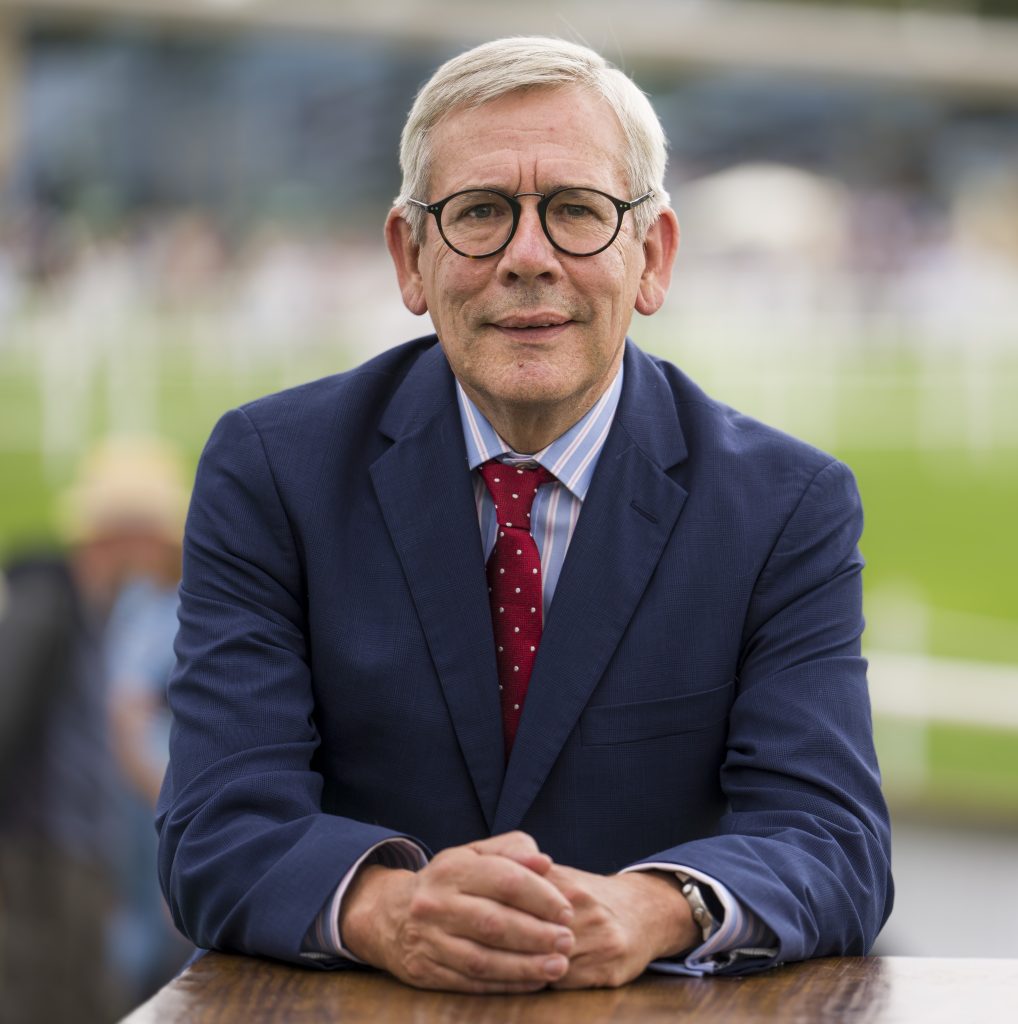
Ian Bentley
As is right at our conferences, we aim to look forward rather than back, and I believe our invited speakers will help to illustrate for us what the future may look like and what we in the industry need to do to ensure it materialises. As always, there is much for us to do, but my main message is that Scotland’s meat industry needs help. We need help to reverse the long-term decline in livestock production in Scotland, a decline which, if it continues, will ultimately call into question the viability of our industry.
We know that at times over the years producers have been critical of farmgate prices, and this was often cited as the reason behind falling numbers. But returns over the past couple of years have improved considerably, yet we have not seen the stimulus to production which we might expect. Instead, the slow downward trend is continuing. I believe this is because we are not seeing the development of a clear, unequivocal policy of support and promotion for Scotland as a key producer of quality meat on the domestic and world stage, a policy which is actively encouraging and incentivising quality livestock production using sustainable practices. The absence of this clear policy harms confidence and contributes to the decline in numbers.
We welcome the boldness of Quality Meat Scotland’s 5-year strategy, but it needs to be underpinned by Government policies which are aligned and designed to make that vision happen.
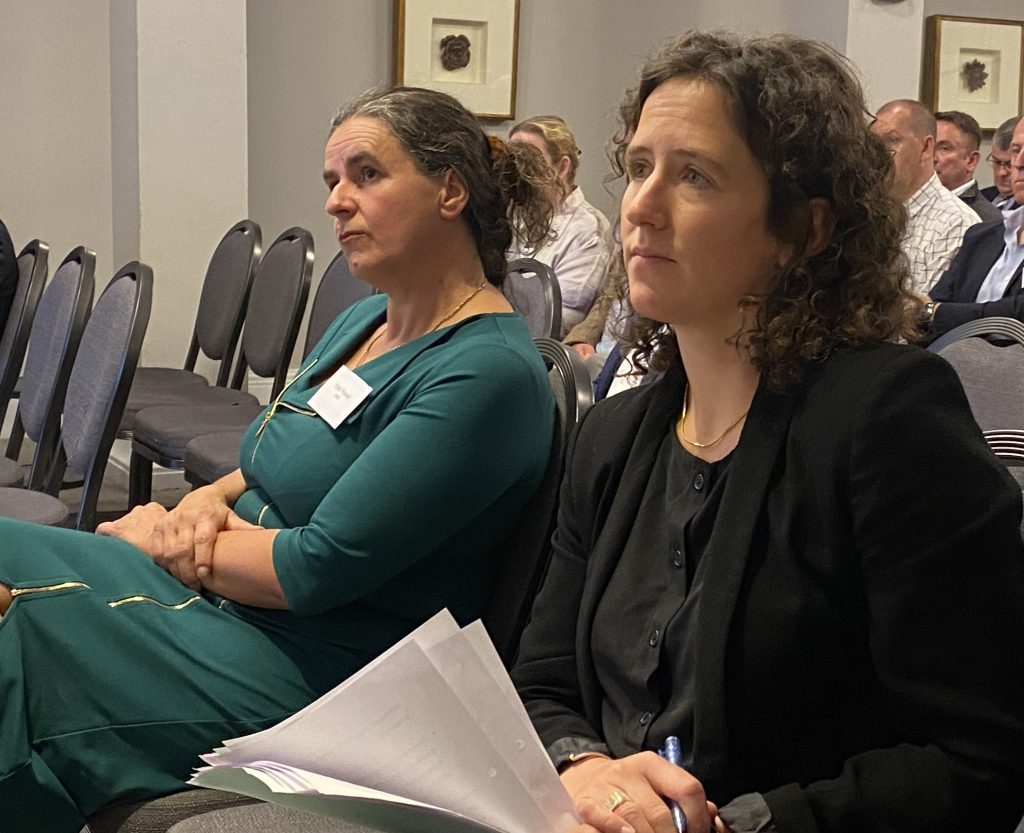
Intent listeners to SAMW President’s speech: Kate Rowell, Chair, QMS, (left) and Mairi Gougeon, Scottish Cabinet Secretary for Rural Affairs.
Scotland is one of the best places in the world to raise livestock for high quality meat in a sustainable way. We have water, we have grass, we have a temperate climate. We have very high standards of animal welfare and regulatory oversight. Despite the regular bashing which meat gets, consumers in many countries are proving to be very loyal to an omnivorous diet, and we know that as prosperity grows in emerging countries, their populations want to, and will, increase their consumption of meat products. Scotland should be gearing up to meet this increasing demand by introducing policies which support increased sustainable production.
But we are not alone. Other nations have recognised these global trends and are responding to them with coordinated activities which are designed to demonstrate the positive attributes of their production. Scotland needs to be joining, and winning, that race.
There is much for us to do as an industry. Carbon is a good place to start – there are great examples in our industry of advances in moving towards net zero. I suspect, however, that we are not doing enough to raise awareness of our progress so that we are not an easy target for those who delight in campaigning against meat production because of emissions. Emissions are not a reason to abandon or even reduce production in Scotland. Instead, emissions should be the subject of funded research and rational investigation to find the best way of minimising them, while also recognising the positive sustainable credentials of extensive production on grass. The easy answer – to reduce livestock numbers in Scotland – will simply encourage production in other countries which could be much more harmful to the environment.
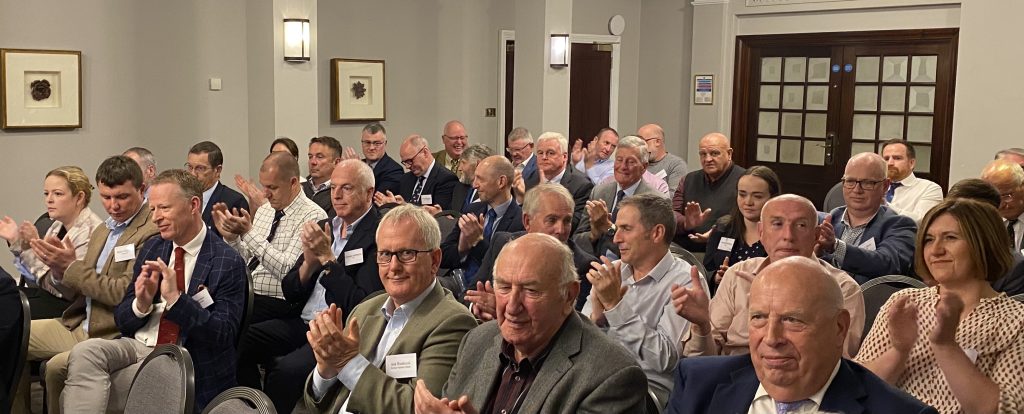
An appreciate conference audience
Human health is another area for our industry to get its act together, but with strong sustained support by policies. We are starting to see a more sober and balanced attitude to meat eating emerging from opinion formers but there is more to be done. This year’s big target seems to be ultra processed foods and their detrimental impact on our health. So, other than a raw carrot, I ask you – what could be a less processed food than a steak, a chop, or a roasting joint? Meat substitute product ingredients lists read like a chemistry set. The ingredients list for a piece of meat, in contrast, is relatively short to the tune of one. But I don’t hear the pundits recognising the simple fact that meat is a natural unprocessed food with lots of essential health-giving attributes. We need to do more to get these messages across. We are not helped, however, when official bodies start taking pot shots – please help us to ensure a rational and sober presentation of the facts.
We have an industry of which Scotland can be proud and is indeed recognised worldwide as a source of excellence. I was in a supermarket in France recently which was proudly promoting its beef as Aberdeen Angus – an industry which should be seen as an opportunity for Scotland to advertise itself as a high-quality food producer – but an industry where its raw material continues to reduce year after year.
As Joni Mitchell said about Paradise and parking lots – “You don’t know what you’ve got till it’s gone”. I urge everyone who cares about our industry, and even those who don’t, to see the opportunity and the threat, and to make sure that as new policy details emerge, they are aimed clearly and unequivocally at enabling this industry to grow.
A Scottish Government spokesman made the following comment to The Courier – https://www.thecourier.co.uk – in response to SAMW’s blog post – Time running out on veterinary declarations.
“This new certification procedure is a direct consequence of the choices made by UK government when it negotiated a hard Brexit.
“The Scottish Government is left with no alternative but to implement these new requirements, reluctantly, as self-certification is not compatible with EU import requirements. We are working to make these changes as simple as they can possibly be and to avoid unnecessary bureaucracy and burdens.
“To support farmers, the Scottish Government is currently exploring an innovative digital solution whereby animal veterinary visits can be recorded and are readily available to certifying official veterinarians. Once initial scoping work has been carried out and initial procedures agreed full guidance will be made available.”
New rules were meant to be introduced last year but were delayed for 12 months as government wasn’t ready. The new rules still haven’t been communicated to the industry and time is now quickly counting down.
From December 13, 2023, all farms selling livestock for slaughter must have have had an annual farm veterinary visit to allow their animals, and/or part of any animal, to be exported out of the UK to the EU. The previous self-certification rules, which involved a farmer declaration, will be replaced by this new procedure.
Farmers who are part of an approved farm assurance scheme, such as Quality Meat Scotland, already meet the requirement for a veterinary visit. Their participation in the scheme is noted as part of the food chain information so no additional veterinary declaration is required for them.
There have been many meetings and discussions held on this issue but little clarity forthcoming. There is speculation and well-informed opinion on how the new rules will be interpreted but until guidance is issued by government that is all it is, speculation and informed opinion. Industry needs to know what Official Veterinarians in meat plants must have in order to sign the necessary export health certificates. While the main problem is going to be with cattle from farms that are non-assured until the guidance is issued, and grey areas removed, we can’t be confident that there won’t be some disruption.
This is all totally unnecessary and something of an insult to farmers and processors who are working hard to maintain exports in the face of an extremely challenging economic climate. The guidance being produced by government needs to be shared with all in the supply chain so everyone knows what they need to do, and everyone can work together to sort out the grey areas. We need to ensure that Official Veterinarians have what they need in order to sign export health certificates. Any delay in the signing of these documents doesn’t just affect a meat plant but everyone in the meat supply chain.
Congratulations to Alistair Donaldson, OBE, on being named as a member of the Royal Highland and Agricultural Society of Scotland (RHASS) Presidential Team for 2023/24.
A former Executive Manager with SAMW, Alistair will be one of the Society’s vice presidents over the next 12 months, supporting new president, Robin Gray, and working alongside fellow vice presidents Maimie Paterson, Alastair Logan, and James McLaren.
“Alistair (FRAgs) brings a wealth of experience from the meat and agriculture industry,” said the Society in its official announcement. “After college, he spent four years in Uganda on a land development project, before spending 30 years at the Meat and Livestock Commission, latterly as Managing Director. Thereafter he was appointed Technical Director of the newly formed QMS, and on retirement became Executive Manager of The Scottish Association of Meat Wholesalers. His roles have been many and varied – board member of QMS, Chairman of the Scottish Panel in CARAS, a Liveryman of the Worshipful Company of Butchers and a Church of Scotland Elder.”
Representing Stirling this year, the Presidential Team will oversee their own Presidential Initiative, which will culminate at the 2024 Royal Highland Show.
Voting options for this year’s Women In Meat Industry Awards is now available on https://womeninmeatawards.com/shortlist/ with a record level of nominations for shortlist selection.
The final deadline for voting is August 29 with the results due to be announced at a ‘5-star ceremony’ in London on November 17.
“We are looking forward to another brilliant occasion, and this year the ceremony and dinner has moved venue to the prestigious Royal Lancaster Hotel and has been expanded to accommodate continued growth,” said organiser, Graham Yandell.
The entrenched reduction of cattle numbers in Scotland overshadows every other issue impacting the country’s red meat sector at present says the Scottish Association of Meat Wholesalers (SAMW). Read more…
T: 07768 654955 E: scott.walker@scconsultancy.uk
© samw.org.uk - All rights reserved - Scottish Association of Meat Wholesalers | Privacy Policy