T. 07768 654955 E. scott.walker@scconsultancy.uk
New rules were meant to be introduced last year but were delayed for 12 months as government wasn’t ready. The new rules still haven’t been communicated to the industry and time is now quickly counting down.
From December 13, 2023, all farms selling livestock for slaughter must have have had an annual farm veterinary visit to allow their animals, and/or part of any animal, to be exported out of the UK to the EU. The previous self-certification rules, which involved a farmer declaration, will be replaced by this new procedure.
Farmers who are part of an approved farm assurance scheme, such as Quality Meat Scotland, already meet the requirement for a veterinary visit. Their participation in the scheme is noted as part of the food chain information so no additional veterinary declaration is required for them.
There have been many meetings and discussions held on this issue but little clarity forthcoming. There is speculation and well-informed opinion on how the new rules will be interpreted but until guidance is issued by government that is all it is, speculation and informed opinion. Industry needs to know what Official Veterinarians in meat plants must have in order to sign the necessary export health certificates. While the main problem is going to be with cattle from farms that are non-assured until the guidance is issued, and grey areas removed, we can’t be confident that there won’t be some disruption.
This is all totally unnecessary and something of an insult to farmers and processors who are working hard to maintain exports in the face of an extremely challenging economic climate. The guidance being produced by government needs to be shared with all in the supply chain so everyone knows what they need to do, and everyone can work together to sort out the grey areas. We need to ensure that Official Veterinarians have what they need in order to sign export health certificates. Any delay in the signing of these documents doesn’t just affect a meat plant but everyone in the meat supply chain.
Congratulations to Alistair Donaldson, OBE, on being named as a member of the Royal Highland and Agricultural Society of Scotland (RHASS) Presidential Team for 2023/24.
A former Executive Manager with SAMW, Alistair will be one of the Society’s vice presidents over the next 12 months, supporting new president, Robin Gray, and working alongside fellow vice presidents Maimie Paterson, Alastair Logan, and James McLaren.
“Alistair (FRAgs) brings a wealth of experience from the meat and agriculture industry,” said the Society in its official announcement. “After college, he spent four years in Uganda on a land development project, before spending 30 years at the Meat and Livestock Commission, latterly as Managing Director. Thereafter he was appointed Technical Director of the newly formed QMS, and on retirement became Executive Manager of The Scottish Association of Meat Wholesalers. His roles have been many and varied – board member of QMS, Chairman of the Scottish Panel in CARAS, a Liveryman of the Worshipful Company of Butchers and a Church of Scotland Elder.”
Representing Stirling this year, the Presidential Team will oversee their own Presidential Initiative, which will culminate at the 2024 Royal Highland Show.
Voting options for this year’s Women In Meat Industry Awards is now available on https://womeninmeatawards.com/shortlist/ with a record level of nominations for shortlist selection.
The final deadline for voting is August 29 with the results due to be announced at a ‘5-star ceremony’ in London on November 17.
“We are looking forward to another brilliant occasion, and this year the ceremony and dinner has moved venue to the prestigious Royal Lancaster Hotel and has been expanded to accommodate continued growth,” said organiser, Graham Yandell.
The majority of shoppers feel meat-free products should be displayed separately to meat products in order to avoid confusion, according to research commissioned by AHDB.
The research, undertaken by AHDB’s Retail & Consumer Insight team with The Smithfield Collective, set out to understand shoppers’ behaviour towards vegetarian and vegan products that are designed to compete with meat.
It found there is potential for confusion for shoppers, with shopping bays where meat and meat-free products were very mixed together being seen as potentially confusing by 52% of consumers.
Products from unfamiliar plant-based brands, or historically meat brands which look very realistic, are the most likely to be unclear at first glance.
The shopping missions are very different for meat and meat-free products with a different set of needs and drivers; therefore 60% of shoppers agreed non-meat products should be displayed in a different place to meat products.
Consumers also agreed meat-free products are trying to replicate meat, with 69% agreeing plant-based products try to describe themselves in a way that sounds like meat.
Fifty per cent of shoppers agree that meat-free products shouldn’t use words like ‘steak’ or ‘bacon’, and 47% feel they shouldn’t use ‘sausage’ and ‘burger’.
The research found that shoppers are fond of meat packaging, with 70% likeability on average across the three meat packs tested. This was much higher than the meat-free packs.
It was not only overall likeability where meat packs outperformed plant-based. The research found 75% of shoppers think the amount of detail on meat labels is about right, in comparison this is only 66% for plant-based packages.
Grace Randall, AHDB Retail Insight Manager said: “This research is helping provide retailers and processors with evidence to protect and grow red meat sales. The findings give the industry the evidence needed to challenge retailers or government that meat and meat-free products shouldn’t be displayed together.
“AHDB will use these findings for further research in to how best to optimise meat packaging.”
See full survey details:https://ahdb.org.uk/knowledge-library/consumer-insights-shopper-behaviour-to-meat-and-meat-free
By Ian Anderson
I first worked with Martin in the 1980s when he arrived for interview to become a Higher Executive Officer within the Scottish Office Meat Hygiene branch. I knew immediately that Martin possessed all the required skills for the role. He also came over as a good guy, an impression which never changed over the subsequent 40 or so years.
Among our responsibilities at the time was hygiene controls in Scotland’s meat plants. This was when the EU single market was just over the horizon, a process which grew into the introduction of the UK adopting common European rules into our meat systems in 1992. That required new plant approvals, health marks, official documents, and all that. It was very technical stuff, but Martin mastered it in no time, helping many members of the Scottish Association of Meat Wholesalers (SAMW), which he later worked with, to implement the new requirements.
In wasn’t long, of course, before we found ourselves embroiled in BSE. Again, Martin demonstrated his mastery of the regulatory controls in his own low key, unflappable manner. Before long he became something of an expert on SRM (specified risk materials) controls and how product separation could be achieved at plant level without production grinding to a halt.
The day when, a few years later, Scotland secured EU approval to once again be allowed to resume beef exports, was a good one for Martin and for the industry at large. It was a fitting reward for the spadework Martin did on meat hygiene and BSE controls.
It seemed at times, however, that perhaps Martin should have been a fireman instead of a civil servant. Working in meat hygiene, after all, was often a case of dealing with one firefight after another. Having just got rid of BSE, for example, we found ourselves confronted by the UK-wide Foot and Mouth Disease (FMD) outbreak. I was promptly sent to Dumfries as Operations Director for FMD in Scotland, with Martin staying in Edinburgh to run the hygiene division in my absence. I never had a moment’s concern about that, knowing that Martin would ‘mind the shop’ every bit as well as I could.
Martin subsequently followed me into SAMW when I stood down in 2017 and I could not have wished for anyone better to carry on that work. His record as the Association’s Executive Manager truly confirmed that. He was calm in the face of adversity and never allowed any surrounding chaos or difficulty to distract him from the objectives of representing the interests of Scotland’s red meat processors. This remained true throughout the hugely pressured period of keeping plants operating in the face of all the COVID-19 lockdowns.
He will be missed by all of us in the Scottish red meat industry, so much so that I can say without any hesitation that we have lost a great, loyal, true friend and colleague, whose love of our industry was up there with the very best.
By Alistair Donaldson
Doug arrived in Scotland in the mid ‘90s and very quickly became a stalwart of the Scottish meat industry. Although there was always some inevitable arm wrestling with meat plants over by-product pricing, he was a staunch supporter.
Born a Cockney, Doug’s early career was as a poultry delivery driver at Smithfield. His move to Scotland was as MD of the Hillsdown-owned Forrest rendering plant and he played a key role in the ’96 BSE catastrophe. With other partners, he bought out the company and went on to set up Argent Energy to produce biodiesel from Forrest tallow and other oils.
Doug made a huge contribution to the rendering industry during BSE and FMD including tackling TSE Reg issues. He also served as President of the UK, EU and World Renderers Associations, as well as EBB, and was awarded a CBE. For his involvement in biofuel developments at Napier he received an Honorary Doctorate and was chuffed to call himself Dr Ward. He went on to Chair Celtic Renewables, an offshoot company.
In retirement many friendships grew stronger not least through enjoying lunches at Butchers Hall featuring copious pre and post prandial ‘sherbets’. When Doug developed prostate cancer, which he fought so courageously, a lunch group was formed in Edinburgh, and it grew to 12 members. It meets every 2-3 months and is very sociable with much reminiscing – Doug much enjoyed them and they will continue.
It is clear from comments following his death that Doug was held in high regard and was a valued friend to many in the industry and beyond – including in the rugby world. Truly a man o’ pairts he made an enormous contribution and will be missed.
Our thoughts are with Jackie at this time.
Dawn Meats, parent owners of SAMW member company Dunbia, has announced a substantial new plan which will see the business target Net Zero operational emissions by 2040, while working towards a Net Zero supply chain as soon as possible.
An initial £90m investment across four key areas: environment, farming, food and society will support the delivery of these Net Zero targets. This approach takes account of the entire supply chain across Scope 1, 2, and 3 emissions while also aligning to the UN Sustainable Development Goals.

Mairi Gougeon MSP Scottish Cabinet Secretary for Rural Economy and Tourism and Niall Browne CEO Dawn Meats & Dunbia, at Sial Paris trade show in October 2022.
The 2040 Net Zero commitment will be structured with a supporting near-term goal. By 2030 Dawn Meats is aiming to reduce Scope 1 and 2 emissions by 59%, through investment in new technology to transform plant infrastructure, transport, thermal energy generation and refrigeration systems,
The Scope 3 supply chain target ambition will be increased to align with 1.5°C, placing the company on a net zero trajectory. Ongoing supplier engagement to reduce emissions and improve farm efficiencies will continue via innovative farming projects and knowledge sharing events. The company will continue to enhance production efficiencies, improve carcase utilisation and derive greater value from their livestock products, which will further reduce emissions intensity.
Other targets include ensuring 100% of their plastic packaging is reusable, recyclable or compostable and sourcing 100% of their cattle and sheep from Bord Bia assured farms in Ireland, and Red Tractor assured farms in the United Kingdom.
Niall Browne, CEO of Dawn Meats and Dunbia, said: “Addressing climate change is one of the key challenges of our time. Dawn Meats has an opportunity to continue to positively impact the supply chain as well as our communities and environment, and a commitment to achieving net zero operational emissions by 2040 is a goal which is the culmination of significant progress to date.”
Celebrating the completion of five years as SAMW’s Executive Manager, Martin Morgan, has been looking back at what has happened since 2017, while also pondering what the future holds for Scotland’s red meat industry.
Brexit, Covid-19, and Russia’s invasion of Ukraine are the key events on the UK, European and global stage which have dominated my five years with SAMW. Each one has resulted in a stream of implications for member businesses and challenges for the Association President of the day and the Executive Council to address.
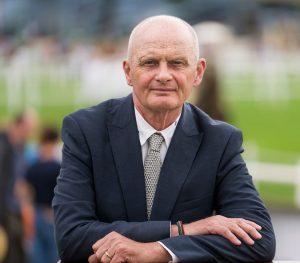
Martin Morgan
Brexit was already well into its second year of ‘implementation’ by November 2017, having been voted for in June 2016. The fact that it took until December 31, 2020, until the UK finally left the EU single market and customs union inevitably meant members facing a long period of regulatory change and uncertainty.
The biggest ongoing challenge post-Exit for many businesses has involved maintaining staffing levels, an issue which still persists today. Those with strong export operations have also had to battle against new border import controls in Europe and extra costs, another issue which hasn’t exactly gone away. Demand for, and loyalty to, the Scotch brand remains strong, however, and gives me cause for optimism for the future.
Covid-19 and the introduction of social distancing and the 2-metre rule, which was obviously devastating at a personal level for us all, also added a new degree of business management demands which we could never have imagined facing. It is a huge tribute to our industry that the disruption to normal delivery processes was kept to an absolute minimum throughout this time although some businesses suffered greatly from the lockdown rules which pretty much closed down the hospitality food service sectors for a prolonged period.
Russia’s attack on Ukraine back in February obviously had a devastating effect on the people directly involved, leading to great disruption across the global food supply chain. As this conflict continues, the impact on industry costs has further tightening member company margins and created a bout of food price inflation and political turmoil not seen for decades.
Throughout the past 5 years the Association has endeavoured to work closely with the UK and Scottish Governments and their officials on all these issues, often securing good outcomes for the processing sector, while also often being left deeply frustrated by the attitudes and intransigence we encountered. Its part and parcel of this job that you win some arguments and lose others. In a few cases, however, it is impossible not to conclude that certain organisations, public and private, are simply being difficult because they can. Sadly, the ‘computer says no’ syndrome is still with us today.
On the plus side, we have built up our day-to-day working relationship and interaction with BMPA, which has been a real positive. I am sure this will continue to pay dividends for our respective members going forward.
Looking to the future, I’m encouraged by the level of commitment and determination shown by members in pursuing domestic and export markets, as they continue to supply top quality Scotch beef, lamb and pork to their global customers.
If my fairy godmother granted me 3 wishes today that would benefit the meat sector, I would ask for Covid-19 to become less of a constant health concern, for peace to return to Ukraine and for the Scottish Government to stop dithering and get in place a new support regime that re-reenergises livestock production. Even if all that happens, however, I’m sure there will be plenty for SAMW’s President, its Council and the Executive Manager to address as 2023 unfolds.
Finally, on a personal note, can I record my deep appreciation of the support I have received from members in dealing with my own health issues.
Three major European red meat importers have been formally recognised for their loyalty and commitment to the Scottish red meat industry.
Scotch Beef PGI importers Lesage & Fils from France and Nice to Meat from the Netherlands received awards from QMS Chief Executive, Sarah Millar and Chair, Kate Rowell, during a reception on the QMS stand in SIAL Paris, one of the world’s most influential food fairs. French-based Scotch Beef and Scotch Lamb GI importers, Macquet, were also acknowledged for their longstanding support for Scotch.
Lesage & Fils + Dunbia Highland Meats
Family business Lesage & Fils has been purchasing Scotch Beef from Dunbia Highland Meats for almost a decade, supplying approximately 1200 professional customers in France, Europe and across the world with their speciality, Scotch Angus, amongst other products.
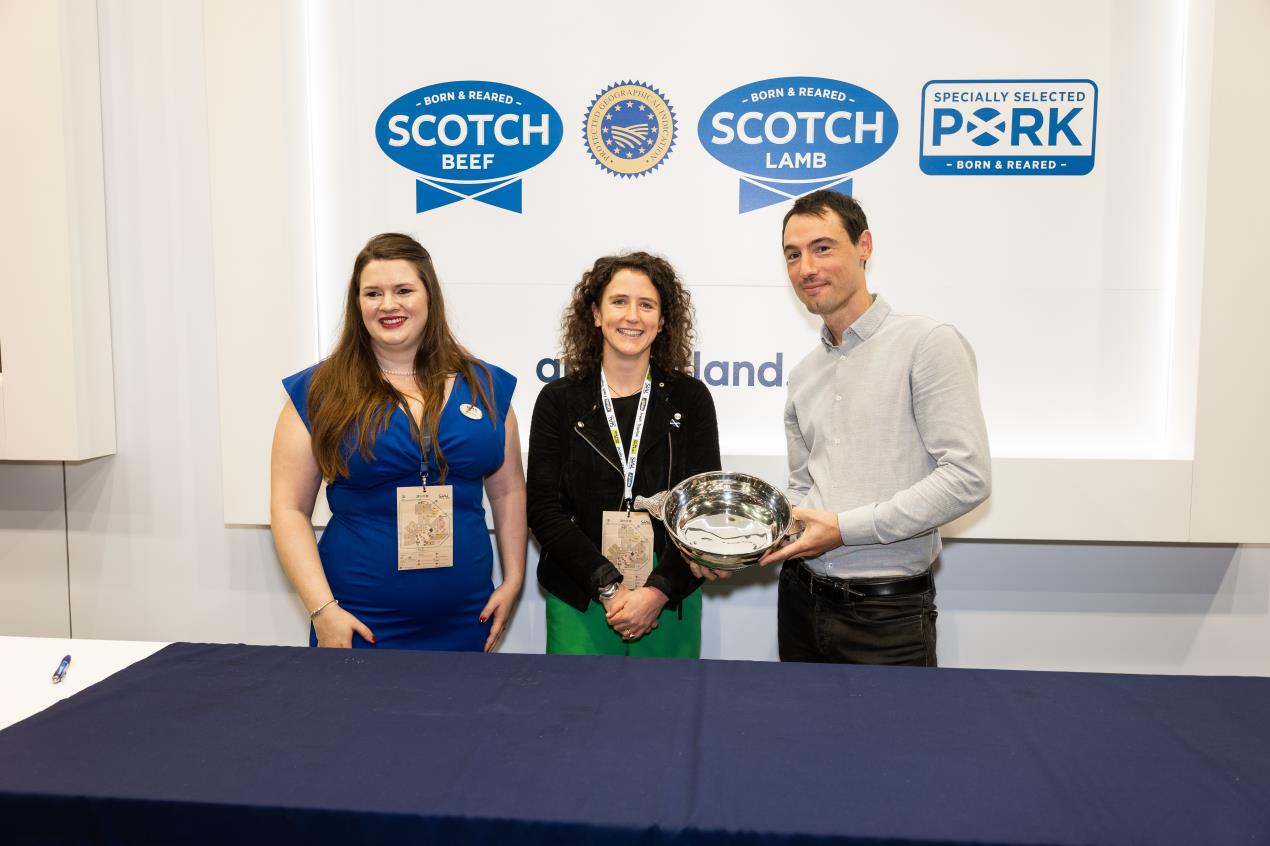
(L-R) – QMS Chief Executive Sarah Millar, Cabinet Secretary Mairi Gougeon and representative from Lesage and Fils
Buyers at Lesage & Fils praised Scotch for its consistency, tenderness and appropriate fat cover that appeals to their markets.
“We are proud of the long-standing partnership we have built with Lesage & Fils and are delighted to see them recognised for their loyalty and commitment to championing Scotch Beef,” said Niall Brennan, UK Sales Director (Primary) at Dunbia. “Partnering with high calibre importers who promote the quality and add value to the Scotch brands is at the core of our industry’s success and we look forward to seeing continued demand for Scotch Beef over the coming years.”
Nice To Meat + AK Stoddart
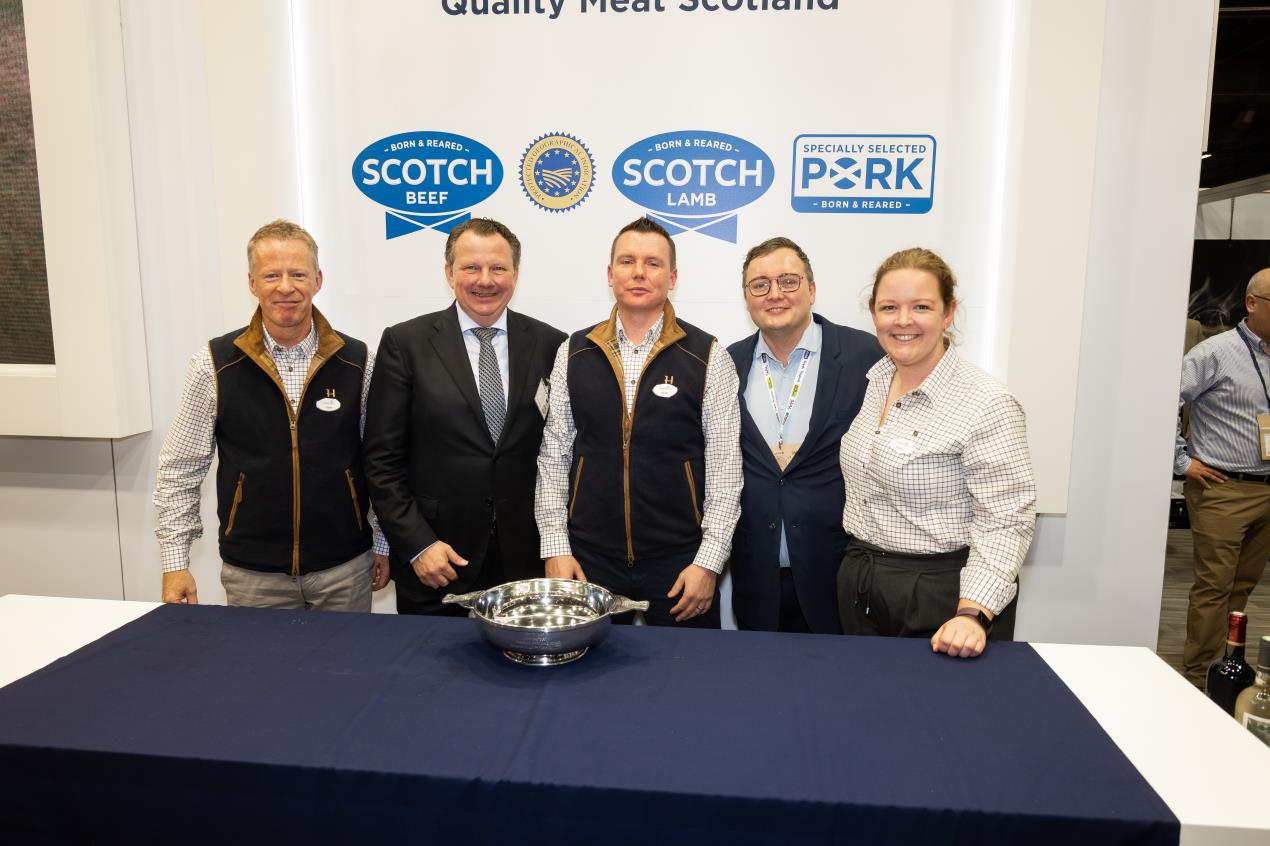
Representatives from Nice to Meat
Also receiving the Scotch Beef Distributor of the Year accolade, Nice To Meat has been working closely with Broxburn-based AK Stoddart since 2019, with sales growing 180% year-on-year, and this trajectory is set to continue.
Commenting on the relationship, Grant Moir, Managing Director of AK Stoddart said: “We are delighted that Nice To Meat has been recognised by QMS for their commitment to Scotch Beef PGI. Passionate about the values that align so closely with our own in terms of quality, traceability and sustainable rearing, we look forward to working together as we continue to serve our global markets.”
Macquet + Scotbeef
Working with Scotbeef for over 50 years, Macquet supplies Scotch Lamb and Scotch Beef to the retail and food service sectors in France, marketing Scotch as quality products and positioning them in a premium range.
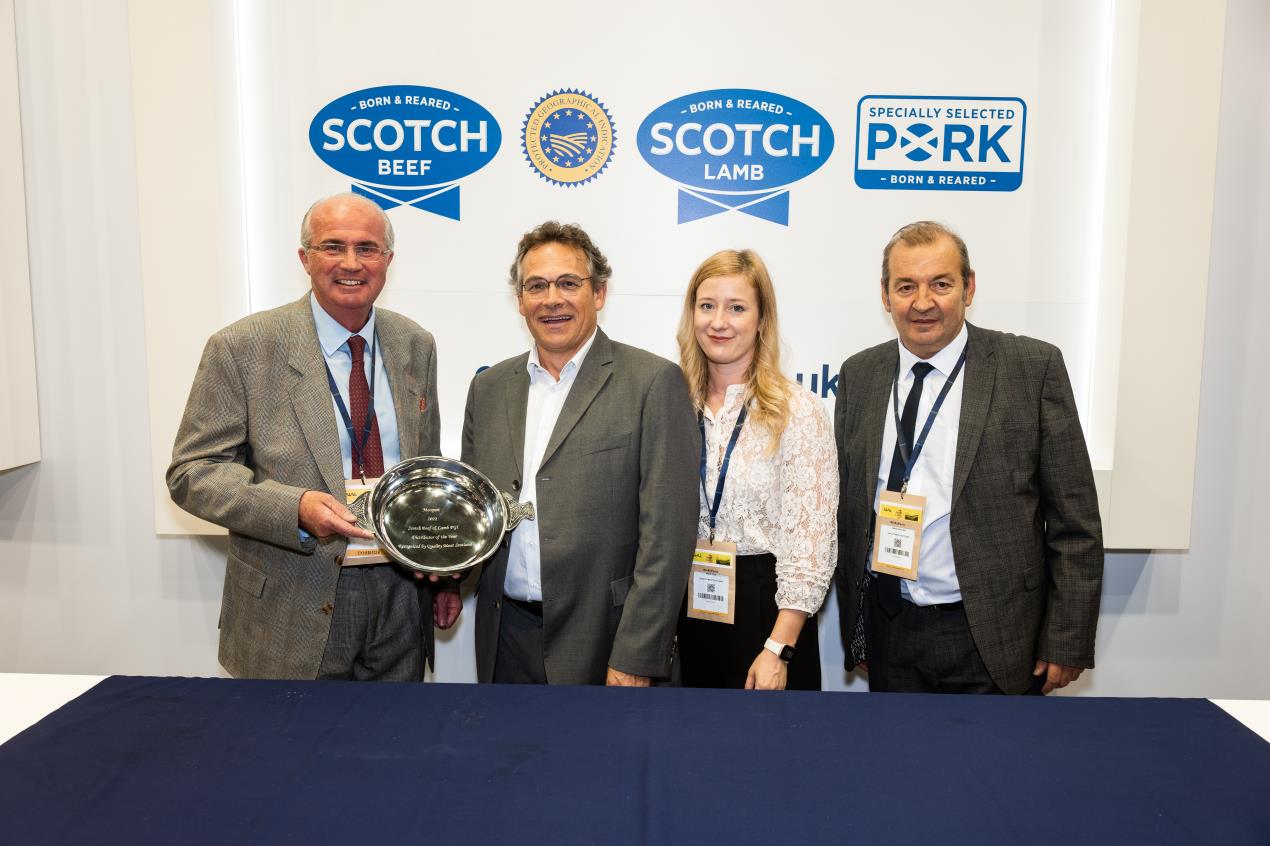
Representatives from Macquet
Simon Dowling, Director, from Scotbeef said: “Despite Brexit, the pandemic and other market challenges, Macquet has continued to build trade with us over the decades. And aside from our consistent trading relationship, they have been an avid supporter of one of Scotland’s largest agricultural events, the Scottish Premier Meat Exhibition, for the past 30 years, sponsoring the best export lamb.
“As such strong advocates for Scottish red meat, we were thrilled to see the Macquet Family recognised by QMS at SIAL.”
During the event, Ms Rowell took the opportunity to highlight the importance of international trade and reinforce the credentials of the Scotch brands:
“Scotland is now, and shall continue to be, open for business,” she said. “We are committed to strengthening our much-valued relationships with overseas customers, who acknowledge and embrace the high standards and quality beef and lamb reared by Scottish farmers. With our abundance of natural grazing land, over supply of fresh water and world class animal welfare, Scotland is the perfect place to produce natural red meat products.”
T: 07768 654955 E: scott.walker@scconsultancy.uk
© samw.org.uk - All rights reserved - Scottish Association of Meat Wholesalers | Privacy Policy